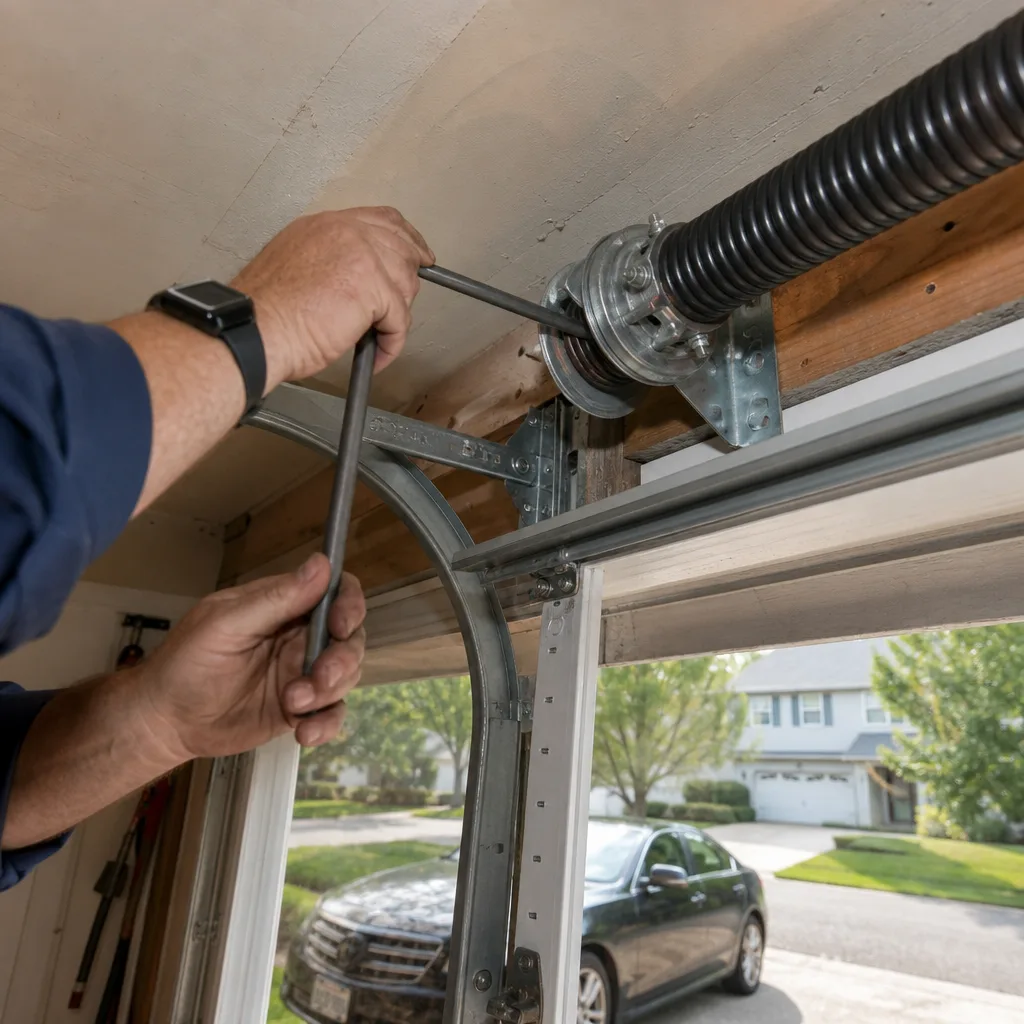
Last updated November 23, 2026
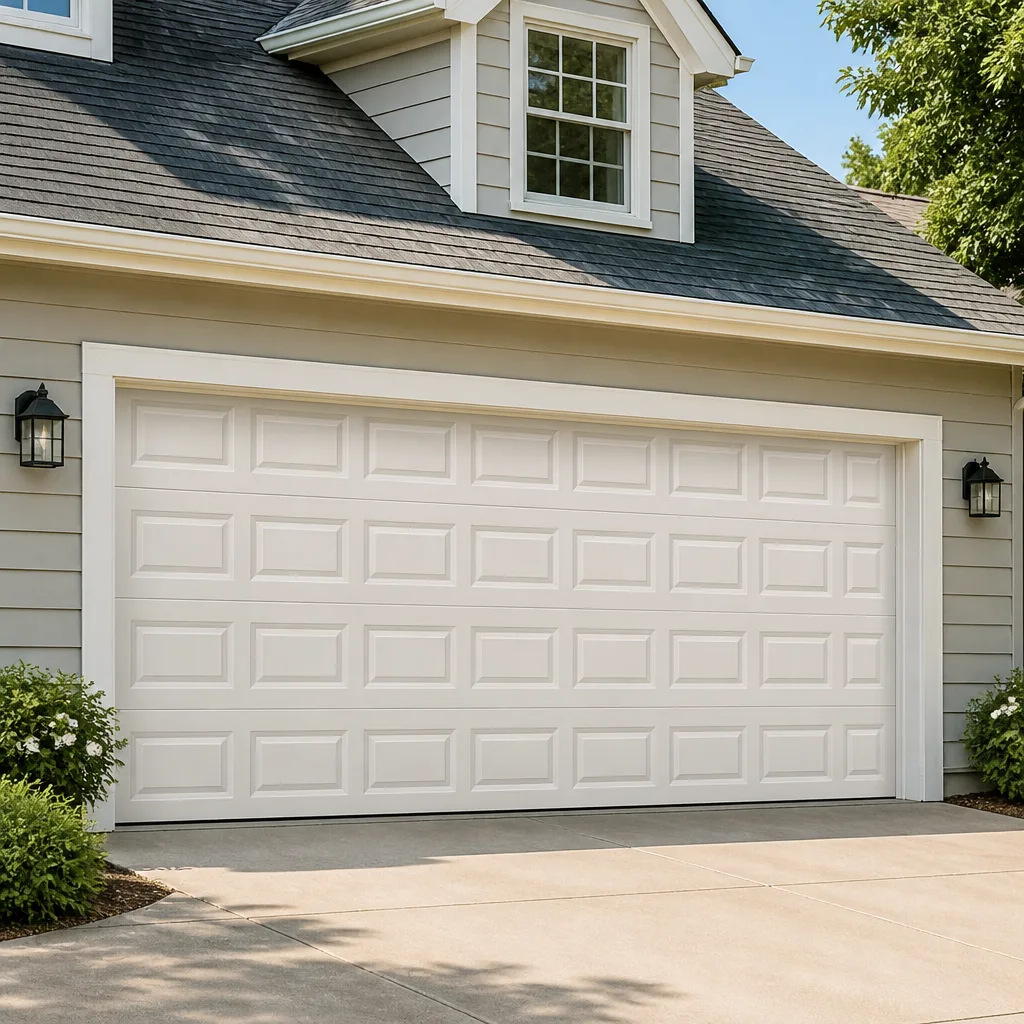 Raised-panel steel
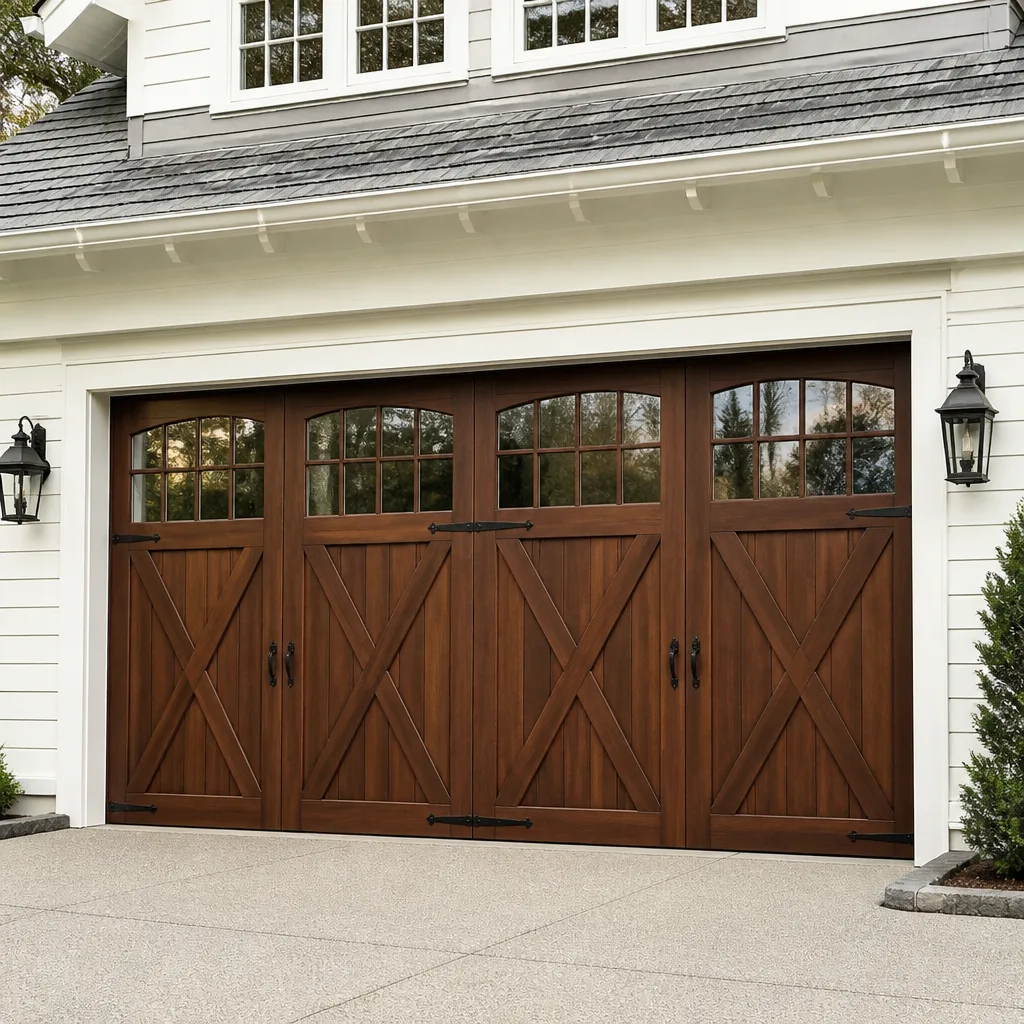 Carriage house
 Modern flush
 Full-view glass
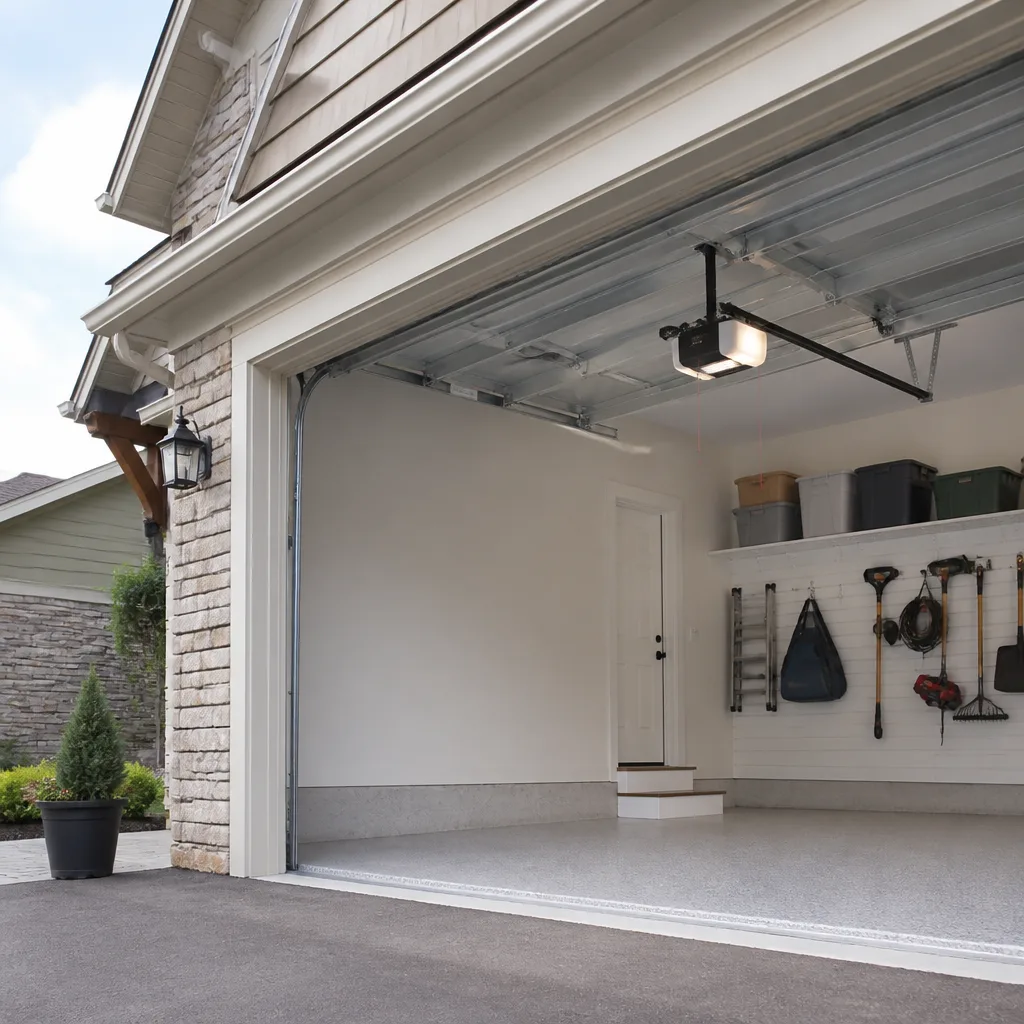 LiftMaster openers
 Chamberlain openers
Full 25-point door and opener safety check with every visit - springs, cables, rollers, tracks, and your LiftMaster or Chamberlain opener included
You get a price before we start. It does not change when the pro arrives.
Get your free estimateGarage Door Repair Maintenance Checklist for Reston Homeowners
Most garage door checklists get the order wrong. They start with tracks and hinges, hand you a can of spray and send you out on a cold morning. But in Reston, the calls that pull us out of bed usually trace back to one thing: the wrong lubricant on the wrong part, or a torsion spring that was already tired before the first freeze. Weather here swings hard between humid summers and freezing winters, and the housing stock that went up through Reston’s planned-community decades sits right in that range. So this checklist is sequenced by what actually fails first, not alphabetically. You’ll learn which components to watch, which lubricants help, which ones quietly destroy nylon rollers, and the handful of checks that genuinely need a trained eye.
Quick Answer
A homeowner maintenance checklist for a Reston garage door should focus on springs, rollers, hinges, tracks and opener force settings, in that order of failure likelihood. Check springs and cables visually every month, lubricate moving metal parts twice a year with a silicone or lithium-based product (never on nylon rollers), and test the opener’s auto-reverse monthly. Anything involving springs, cables or the torsion shaft is a technician job, every time.
Styles & brands we work with
- Raised-panel steel
- Carriage house
- Modern flush
- Full-view glass
- LiftMaster openers
- Chamberlain openers
Table of Contents
- Why Failure Order Matters in Reston’s Climate
- Step 1: Inspect Springs First (Before Anything Else)
- Step 2: Lubricants That Help and Lubricants That Ruin Rollers
- Step 3: Rollers, Hinges and Track Alignment
- Step 4: Opener Tests You Can Safely Run Yourself
- Annual vs. Biannual Tasks: What Actually Needs Doing Twice a Year
- Safety Warnings Every Homeowner Should Read
- When to Call a Professional
Why Failure Order Matters in Reston’s Climate
Reston sits in a pocket of Northern Virginia where the same door can sweat through a humid July and then contract hard in a January freeze. Metal expands and contracts, and every cycle of that loosens a bolt somewhere. Springs, which carry the full weight of the door, take the worst of it. That’s why spring inspection belongs at the top of any list written for this area, and why we treat it as a distinct discipline rather than a footnote.
Housing age adds a second layer. Many Reston homes were built across several waves of development, from the original planned-community construction to newer infill. Older doors often run extension springs mounted above the track; newer installs typically use torsion springs on a shaft above the door. Each type wears in its own pattern, and each fails differently. If you own an older Reston home with extension springs, you should know that they stretch measurably over years and lose lifting power gradually. The door just starts feeling heavy. On torsion springs, the coils fatigue and you may hear a distinct metallic ping before anything breaks.
What we’ve seen is that homeowners who understand the sequence – springs, then rollers and hinges, then tracks, then opener – catch problems earlier. The person who starts with the tracks is usually chasing a symptom, not the cause. If a door binds, the track may be blaming the spring.
If you’re already past the inspection stage and something has failed, our Garage Door Repair Reston page is where to start, and we can walk through what’s likely going on before anyone comes out.
Step 1: Inspect Springs First (Before Anything Else)
Springs are the single most stressed component on your door. They do the lifting so the opener doesn’t have to. When they weaken, everything downstream – the opener motor, the cables, the rollers – works harder and wears faster. That’s why they come first, and why a professional garage door spring repair is the one job we never recommend a homeowner handle personally.
Torsion springs (the shaft above the door)
Look for a visible gap in the coil. A broken torsion spring shows a clean gap, usually about a quarter to a half inch, where the coil snapped. If the door only lifts a few inches and stops, or feels impossibly heavy when you try to raise it by hand, a torsion spring has likely failed. Don’t force it.
Extension springs (mounted above the horizontal tracks)
Check for stretched coils, gaps between coils, or a spring that hangs noticeably loose on one side. Extension springs often stretch slowly, so the door seems fine until it doesn’t. On Reston homes from older build phases, this is the pattern we see most. If one extension spring looks different from the other, that door is under uneven load.
A weight-class observation
Reston’s door weights run light to heavy depending on the panel material and the decade of the build. A heavy steel door with an insulated core needs a properly rated spring; a lighter Wayne Dalton or Raynor door needs less. A door that lifts harder than usual on a cold morning is telling you the spring is under-performing. That’s not a lubricant problem.
Leave spring adjustment and replacement to a technician. Springs are under extreme tension, and the wrong move can cause serious injury. If your spring is giving you trouble, that’s exactly the kind of work we handle. Our team has up to 15 years of experience on these systems, and a spring repair is typically done in a single visit.
Step 2: Lubricants That Help and Lubricants That Ruin Rollers
This is the section most checklists skip, and it’s the one that matters most in Reston. A common cold-morning mistake is spraying a petroleum-based lubricant like WD-40 (the standard water-displacing formula, not a silicone product) or a heavy grease onto nylon rollers and hinges. Petroleum products degrade nylon. They soften it, attract grit, and turn rollers sticky, which then drag in the track and wear the whole door. That single mistake creates a lot of unnecessary calls.
What to use
- Silicone spray – safe on metal hinges, metal rollers, and the torsion shaft bearings.
- Lithium grease (white lithium) – good on the torsion shaft and bearings and on the hinges, applied sparingly.
- White lithium on the opener’s chain or screw – if your opener uses a chain drive, a light coat on the chain reduces noise and wear.
What to avoid
- Petroleum-based spray (standard WD-40) – degrades nylon rollers and attracts dust.
- Heavy grease on nylon rollers or plastic parts – it captures grit and becomes a grinding paste.
- Anything on the tracks – tracks should be clean and dry. Lubricant there just attracts dirt.
If your door has nylon rollers (many modern Reston installs do), don’t lubricate them at all. Clean them, check them for flat spots or cracks, and replace when they look worn. Getting this one distinction right saves a lot of premature wear.
Step 3: Rollers, Hinges and Track Alignment
Rollers and hinges are the mid-tier of the failure list. They don’t fail as catastrophically as springs, but they cause most of the noise and friction. Run this inspection sequence once every few months.
- Inspect rollers. Steel rollers should spin freely; replace any that don’t. Nylon rollers should be clean and round; replace any with flat spots, cracks, or a sticky surface.
- Inspect hinges. Look at the hinges where the panels connect. Worn hinges make a door sag and rattle. Look for loose screws and bent leaves.
- Check the gap along the track. Look at the gap between each roller and its track. If one roller sits noticeably off-center, the track may have bent or slipped.
- Check track alignment visually. Step back and look at both vertical tracks. They should be parallel. A slight bend usually comes from a bump or from a panel flexing under impact. Never force a bent track back with a hammer.
- Look at the weather seal. The bottom rubber seal should sit flat against the floor. A gap lets in Reston’s humid air and cold drafts, and it can also tell you if the door is unbalanced.
If a vertical track is bent, that’s a professional fix. A bend that looks small usually means a roller is binding, which means the door is being pulled out of square, which puts extra load on the opener. We’ve seen plenty of garage door repair calls where the fix was simple once we found the source: one bent track, one stuck roller, or one hinge that had been loose for months.
Step 4: Opener Tests You Can Safely Run Yourself
You don’t need a technician to run most opener checks. You do need to keep your hands away from springs and cables while you do them. Here’s what’s safe to verify on your own.
Safe homeowner tests
- Balance test. Disconnect the opener with the manual release (pull the red cord with the door fully closed). Lift the door halfway by hand. If it holds there, the spring balance is fine. If it falls or feels heavy, call a professional.
- Auto-reverse test (the most important one). Place a small object like a roll of paper towels or a block of wood on the floor in the door’s path. Close the door with the opener. The door should reverse when it touches the object. If it doesn’t, stop using the opener until it’s fixed.
- Force test. With the door open, hold your hand under the bottom edge (not in the path of the door) and let the door travel down to meet it. The door should reverse with light pressure. This is a safety check. If it takes effort, the force setting is too high.
- Photo-eye test. The two small sensors on either side of the door should have steady indicator lights. Block one with your hand and the door should reverse. If lights are flashing or off, the sensors are misaligned or dirty.
- Remote battery check. If your remote works inconsistently from the driveway, batteries are the first suspect. If that doesn’t fix it, check for frequency interference near the opener (recently installed LED bulbs are a common cause).
Tests that need a technician
- Adjusting force limits beyond the standard test (opener force calibration on LiftMaster, Chamberlain, Genie, or Craftsman openers needs a specific procedure and a safety check afterward).
- Travel limit adjustment. Done wrong, the door can overtravel and jam.
- Circuit board or logic board diagnosis.
- Travel module or gear replacement.
If your opener is a LiftMaster, Chamberlain, Genie, Craftsman, or a Raynor setup, most of these checks take ten minutes and no tools. For anything that goes past the standard force and auto-reverse test, our garage door opener repair work covers the full opener platform.
Annual vs. Biannual Tasks: What Actually Needs Doing Twice a Year
Manufacturers often over-specify. You don’t need to lubricate your door monthly. In Reston’s climate, a twice-yearly rhythm works well: once in late fall before the first freeze, and once in spring after the winter contraction has relaxed.
Twice a year (spring and late fall)
- Lubricate hinges, metal rollers, torsion shaft bearings, and the opener chain or screw with silicone or white lithium.
- Clean the track (dry cloth, no lubricant).
- Wipe down nylon rollers and inspect for flat spots.
- Tighten any loose hinge screws you spotted.
- Run the auto-reverse and photo-eye tests.
Once a year
- Balance test on the door.
- Full visual on the springs. The springs get a monthly glance, but a real inspection once a year.
- Weather seal check at the bottom of the door.
- Opener force test.
- Anything you flagged but didn’t get to during the year.
Monthly (visual only)
- Glance at the springs.
- Listen to the door. New noise is information.
- Watch the door travel. Anything jerky or uneven needs a look.
That’s the practical version. If you want a benchmark for twice-a-year, check the door after the first cold snap and again after the first humid stretch. Those are the transition windows where problems show up in Reston.
Safety Warnings Every Homeowner Should Read
Springs and cables are under high tension and can cause serious injury. Never attempt to adjust, remove, or replace a spring, and never touch or try to straighten a cable. If a cable is frayed, slack, or off its drum, stop using the door and call for service. The torsion shaft, the spring winding bars, and the cable system are all technician territory.
Keep fingers away from the hinge pinching points and never reach into the track to clear a roller while the door is in motion. The door is heavy and the opener is strong. On the opener side, force limit adjustment is the most common place homeowners get it wrong: a limit set too high means the door won’t reverse against an object, and a limit set too low means the door reverses on its own during normal operation. Either is a safety issue.
If a door is off its track, don’t try to lift it back in. An off-track door can fall. Close the door if you safely can, then call. Emergency service exists for exactly this: a door that won’t open traps the car, and a door that won’t close leaves the house open to the street. We offer emergency garage door service for time-sensitive failures.
Common Mistakes to Avoid
- Starting with the tracks instead of the springs. A binding door usually has a tired spring behind it. Faulty diagnosis sends you down the wrong repair path.
- Using standard WD-40 on nylon rollers. Petroleum-based products degrade nylon. This is the single most common self-inflicted problem we see.
- Lubricating the tracks. Tracks should be clean and dry. Lubricant attracts dirt and turns the track into a slow-moving trap for the rollers.
- Adjusting the opener force limit to compensate for a heavy door. If the door feels heavy, the spring is the problem, not the opener. Raising the force setting hides the real issue and pushes the opener toward failure.
- Ignoring the auto-reverse test. A door that won’t reverse against an object is a safety hazard, full stop. Test it monthly, fix it immediately.
- Assuming a monthly lubricant schedule is right for Reston. Manufacturers over-specify on the safe side. Twice a year is enough in this climate for most doors, and more is just mess.
- Trying to fix a bent track or a failed spring personally. Both are precision jobs. Forcing either usually turns a small repair into a panel replacement.
If you’re not sure whether something is a spring problem or an opener problem, that’s where we can help. Letting a technician make the call early usually saves money compared with letting the two systems argue for six months. Our garage door repair work covers both the door and the opener, so one visit can settle it.
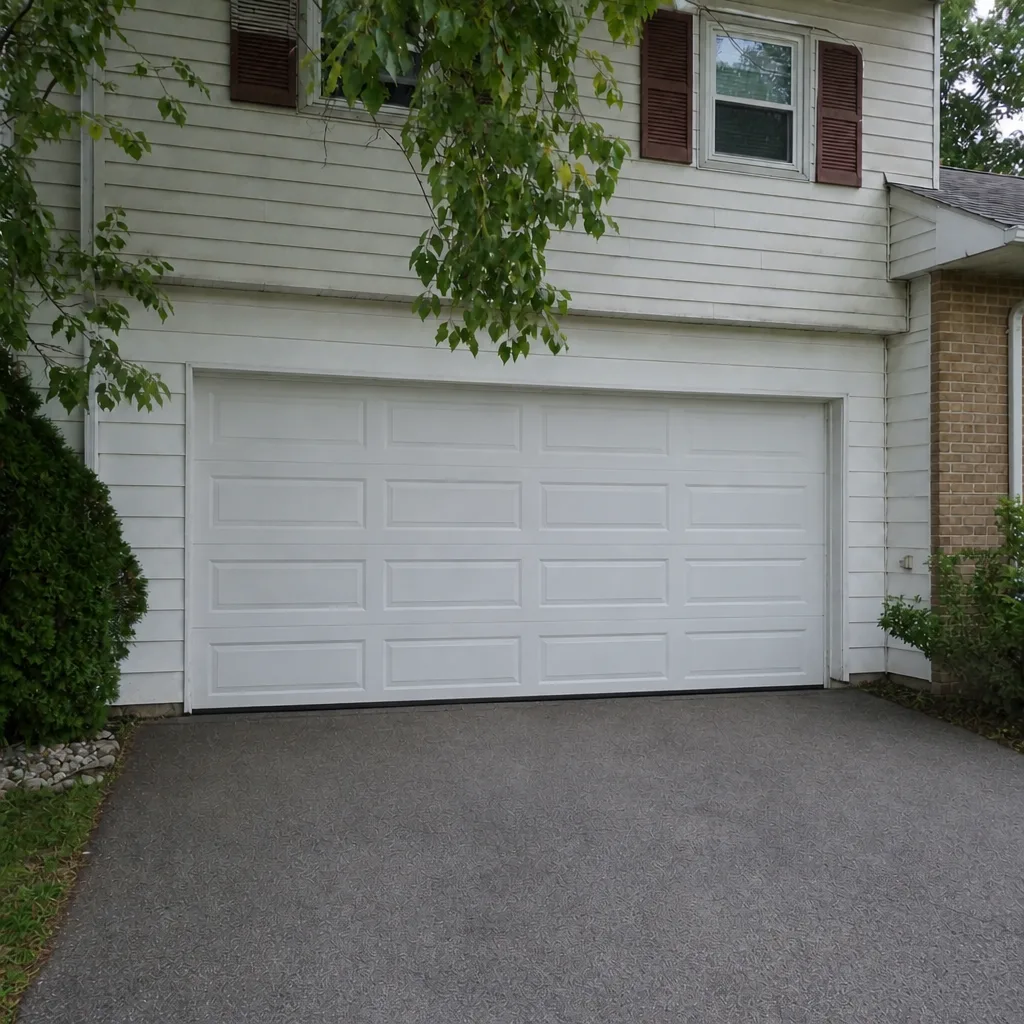
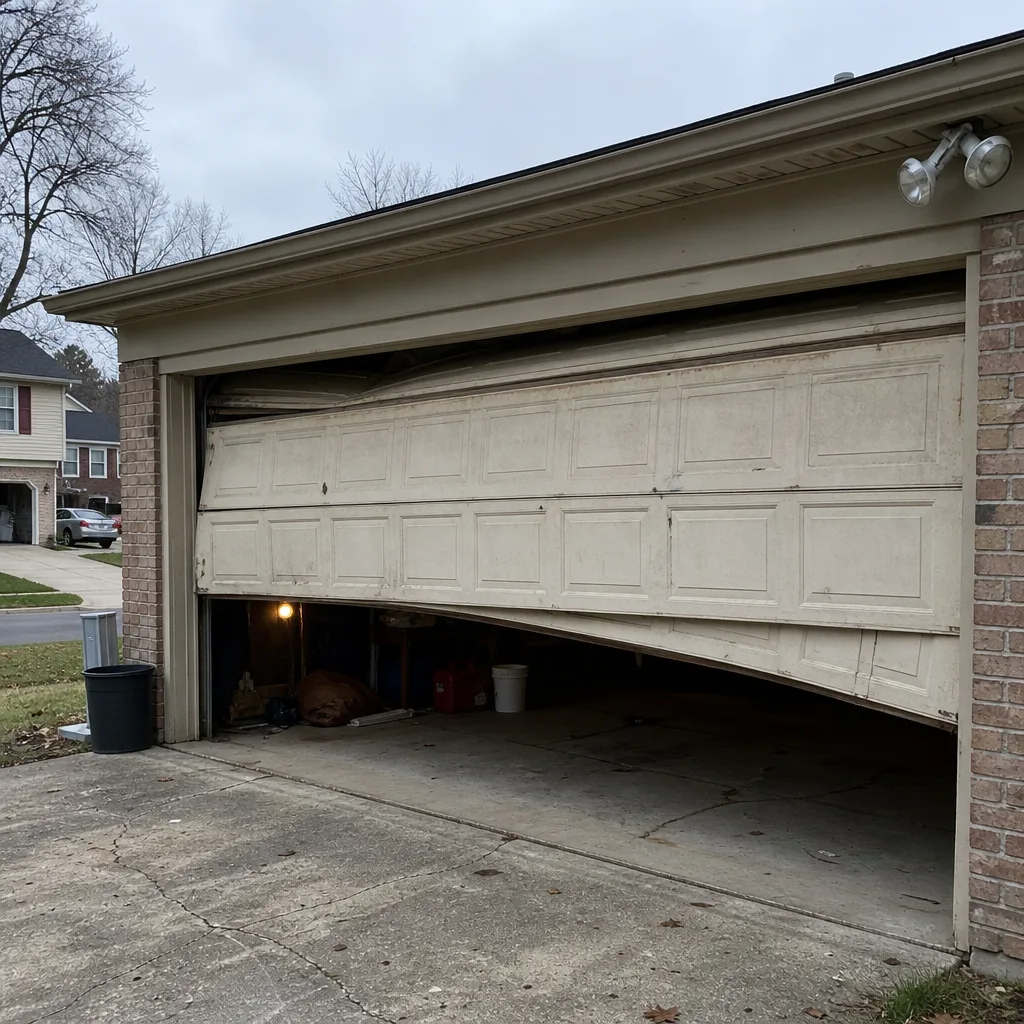
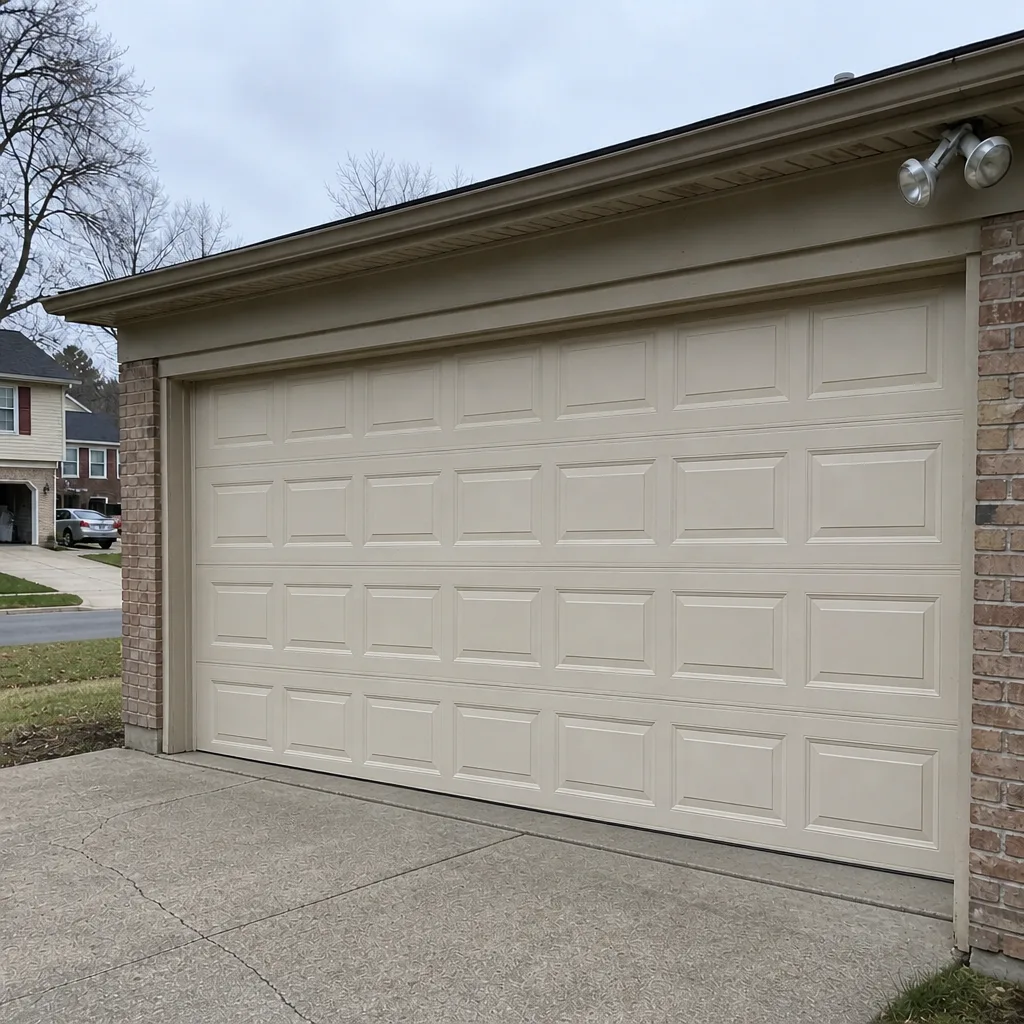
See the difference
 Before
 After
 Before
 After
 Before
 After
When to Call a Professional
Some jobs are homeowner work and some aren’t. Springs, cables, track realignment, and force-limit adjustment need a technician. The door that won’t lift, the door that stops halfway, the door that reverses on its own, and the door that won’t close all need a technician if the quick checks above don’t solve it. An off-track door is an immediate call. A broken spring is an immediate call. A snapped cable is an immediate call.
If you’re planning a full replacement instead of a repair, our team handles installation of Clopay, Amarr, Wayne Dalton, and Raynor doors, and we can quote a replacement during the same diagnostic visit that found the problem. No second appointment, no second opinion needed.
Garage Door Repair Reston offers free estimates in Reston. Call (866) 972-4956 and we’ll talk through what you’re seeing before we come out. If the door is stuck right now, mention that and we’ll treat it as emergency service.
Frequently Asked Questions
Twice a year is enough in Reston’s climate: once in late fall before the first freeze and once in spring. Use silicone spray or white lithium on hinges, metal rollers, and the torsion shaft. Never lubricate nylon rollers or the tracks.
Springs first, then rollers and hinges, then tracks, then opener. Springs cause the most failures in this climate and can hide behind other symptoms, so they get first inspection. If a door binds, check the spring before chasing the track. Call (866) 972-4956 for a free estimate if you’re unsure.
No. Garage door springs are under extreme tension and adjusting or replacing one is a serious injury risk. That’s a job for a trained technician. If your spring is broken or the door feels heavy, call us for a free estimate.
Petroleum-based lubricants and heavy grease degrade nylon, soften the roller, and attract grit that grinds the roller and track. Nylon rollers should be cleaned and inspected, never greased. This is the number-one self-inflicted garage door problem we see in Reston.
Yes, but don’t try to lift it back into place yourself. An off-track door can fall. Close it if you safely can and call. If it’s stuck open or closed and blocking your car, that’s exactly the kind of call we handle as emergency service. Call (866) 972-4956 for a free estimate.
Twice-a-year tasks are lubrication, cleaning, and the auto-reverse test. Once-a-year tasks are the balance test, deeper spring inspection, weather seal check, and a full look at anything you flagged during the year. Monthly visual checks on the springs and door travel are quick glances, not full service.
The Bottom Line
The best maintenance checklist for a Reston homeowner isn’t alphabetical, it’s ordered by what actually fails first. Springs, then lubricant discipline, then rollers and hinges, then tracks, then opener checks. Get the order right, and you’ll catch most problems before they become a stuck door on a cold morning. Get lubricant discipline right – no petroleum on nylon rollers, no grease on the tracks – and you’ll avoid the most common self-inflicted issue we see. The tasks that go past your safety line are springs, cables, and force-limit adjustment. Those get a call.
Contact
If something on your door doesn’t feel right, or you’re ready to have it looked at, call us at (866) 972-4956. Garage Door Repair Reston offers free estimates in Reston and can walk through your situation before anyone comes out. Whether you’re due for a spring renewal, an opener force check, or you’re thinking about a new door altogether, we can be your single point of contact. Our technicians have up to 15 years of experience across LiftMaster, Chamberlain, Genie, Clopay, Amarr, Wayne Dalton, Craftsman, and Raynor systems. One call covers the door and the opener.
Written by the team at Garage Door Repair Reston.