Last updated November 23, 2026
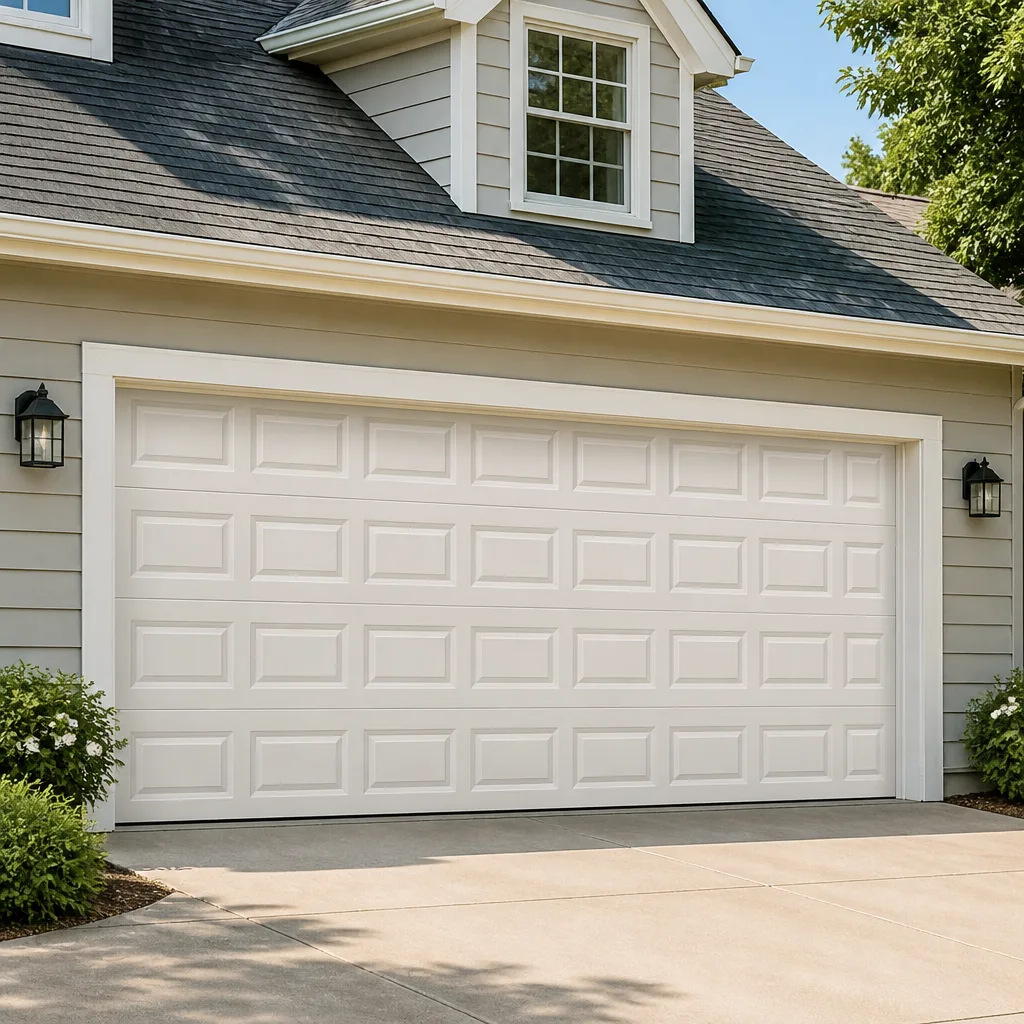 Raised-panel steel
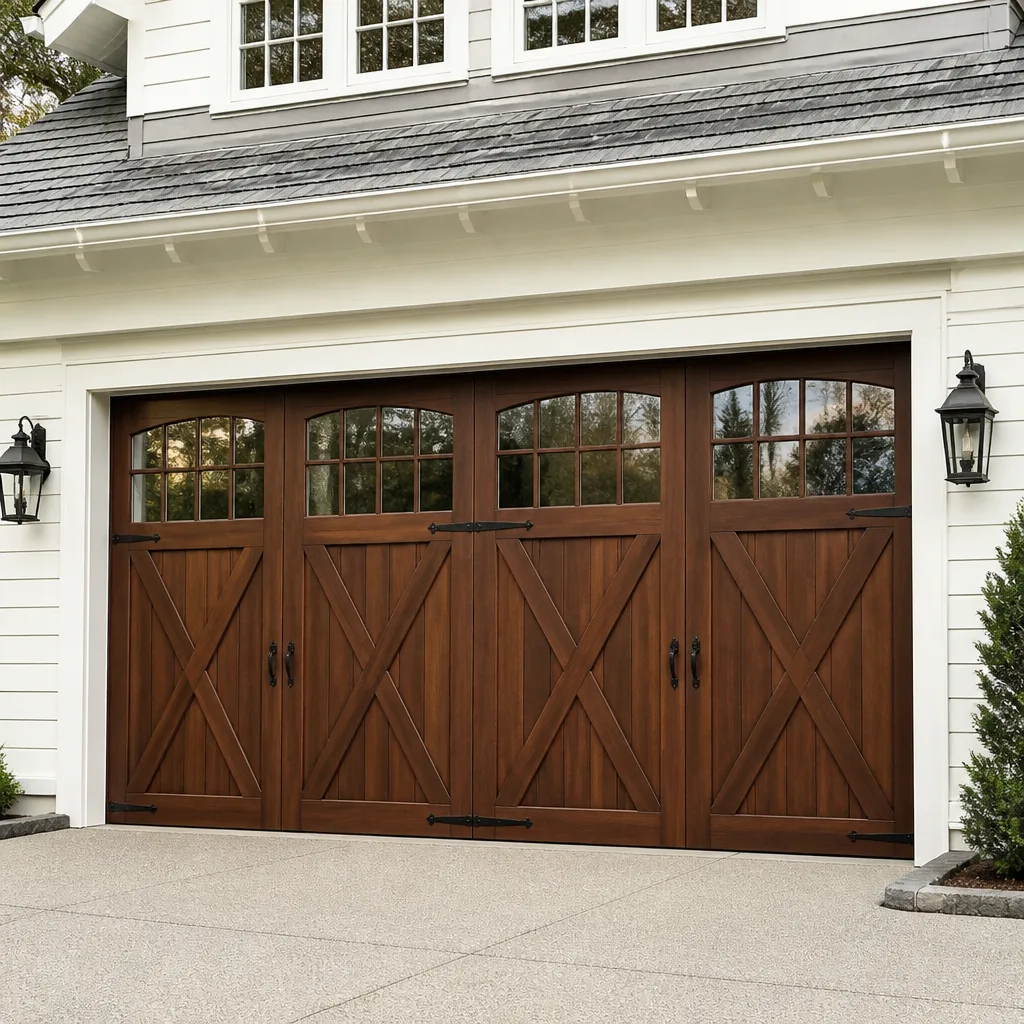 Carriage house
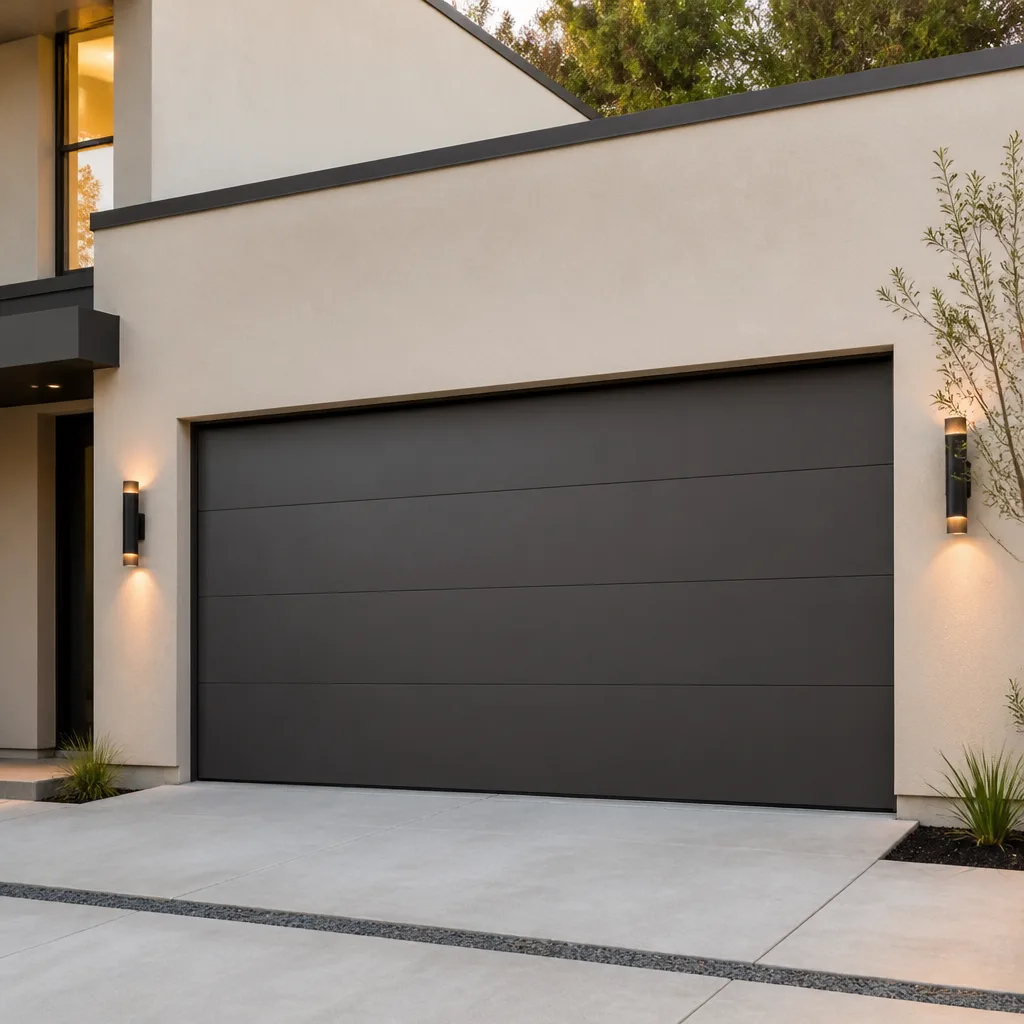 Modern flush
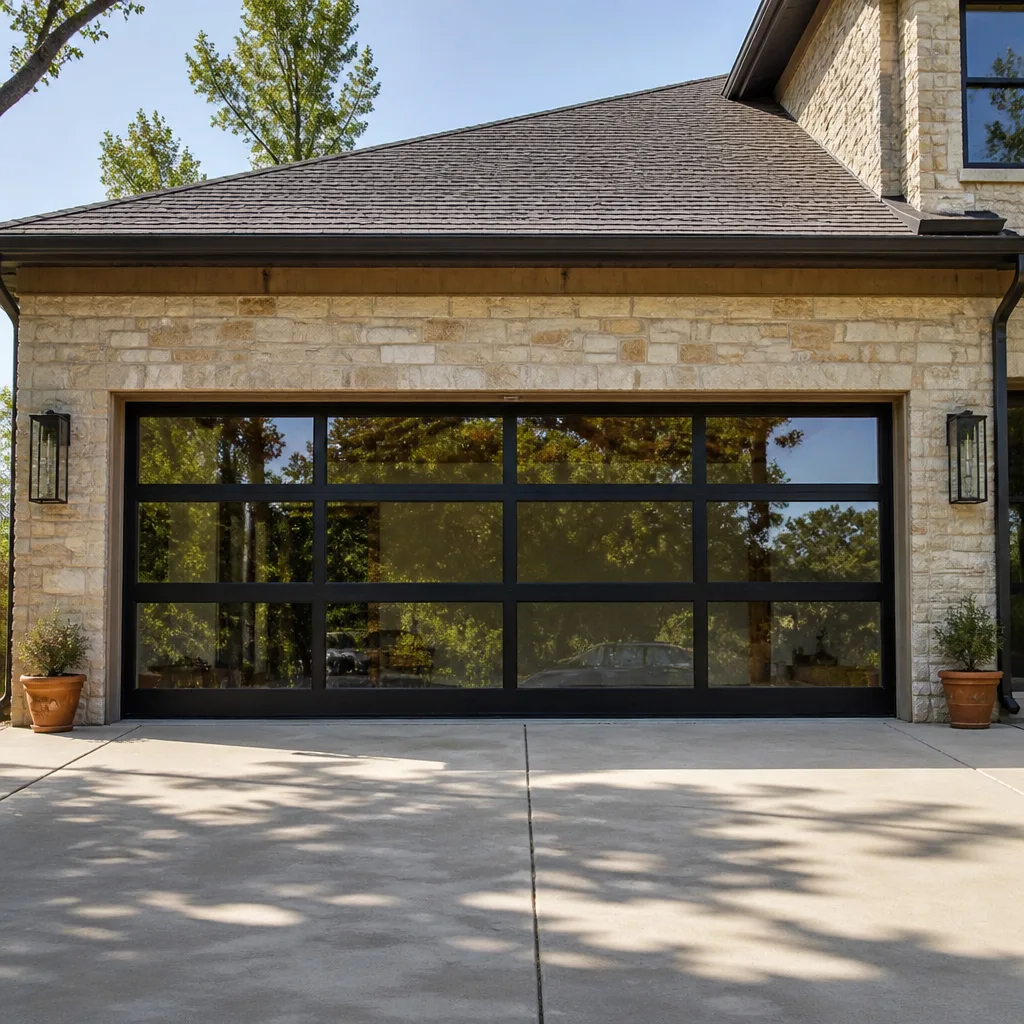 Full-view glass
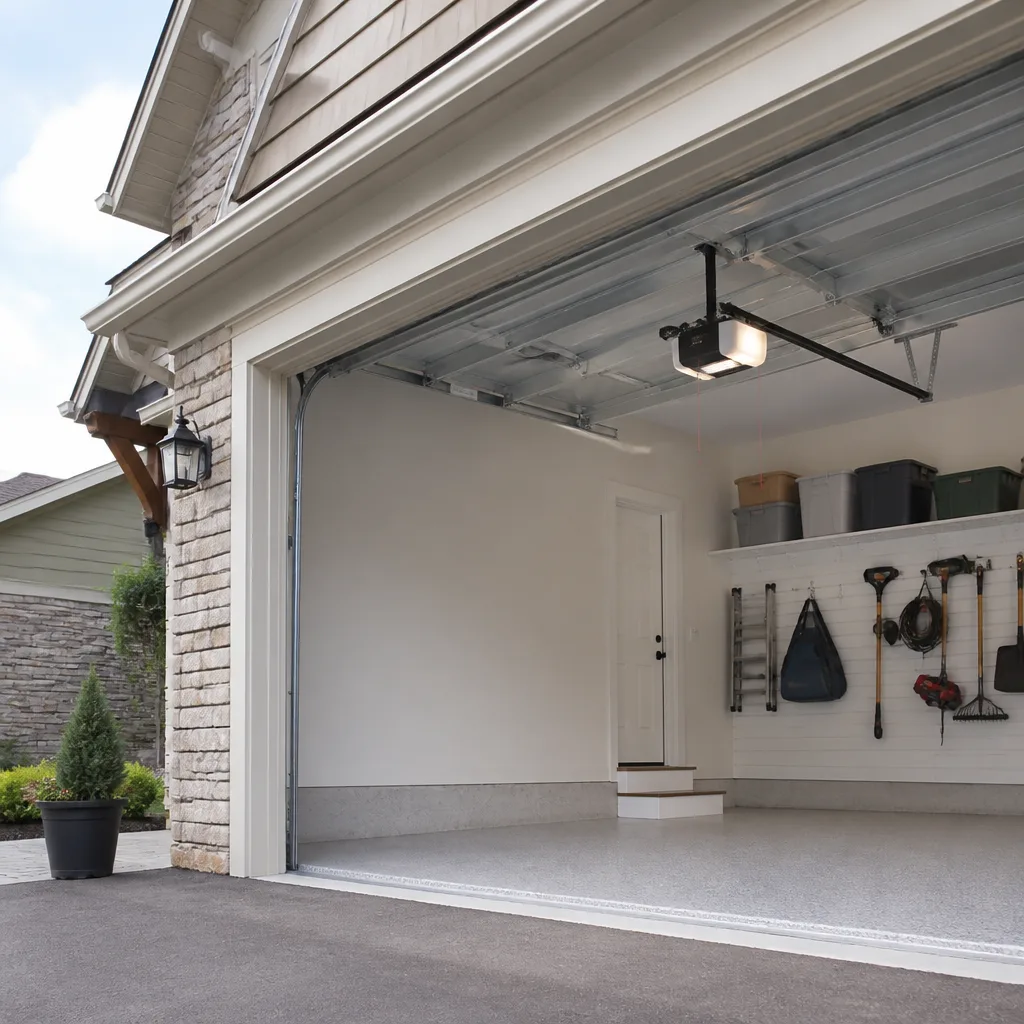 LiftMaster openers
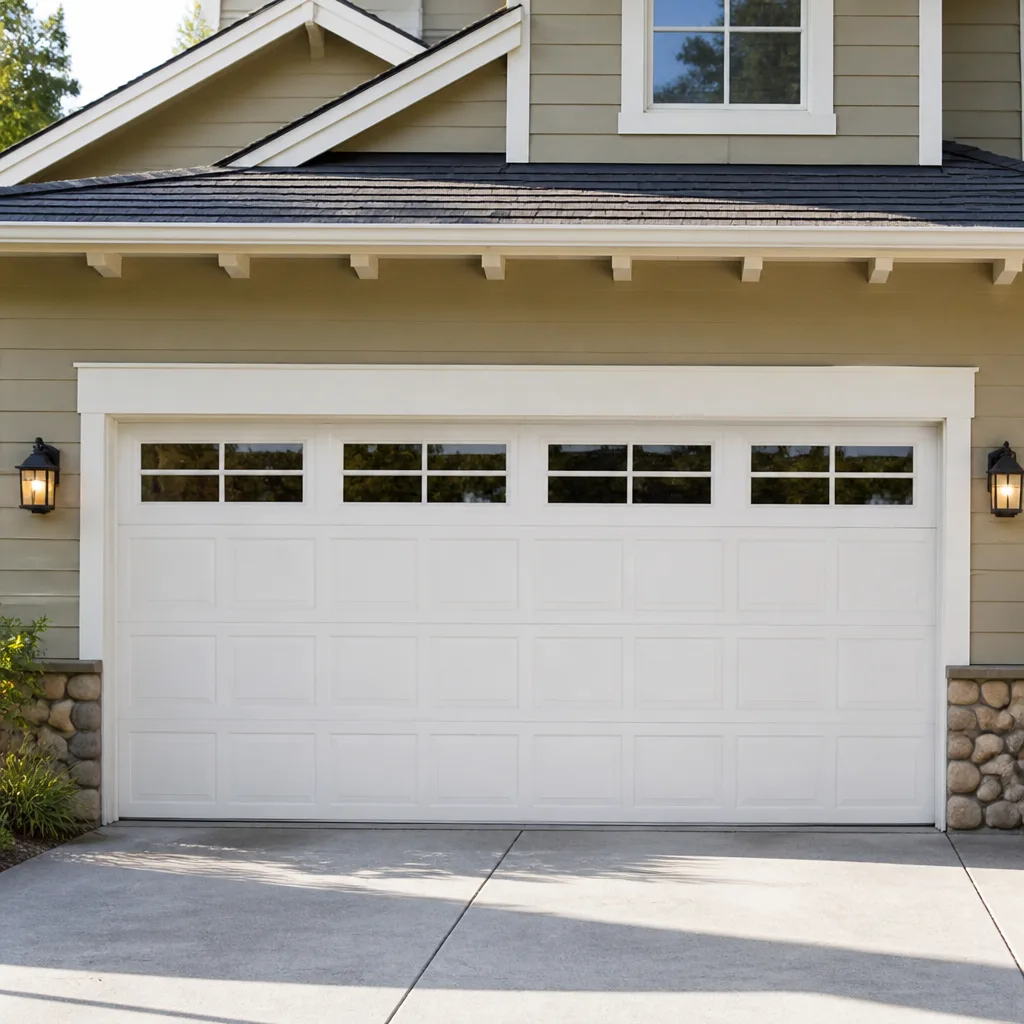 Chamberlain openers
Full 25-point door and opener safety check with every visit - springs, cables, rollers, tracks, and your LiftMaster or Chamberlain opener included
You get a price before we start. It does not change when the pro arrives.
Get your free estimateThe Complete Guide to Garage Doors in Reston
Most guides to garage doors tell you to pick a style, measure the opening, and call an installer. In Reston, that order is backwards. More than 100 HOA communities here review door color, panel layout, and even window placement, and the costliest outcome isn’t a door you don’t love – it’s a door you love that the architectural review board rejects after it’s already on the house. Reston, VA sits in a stretch of the Dulles Corridor where summer humidity lingers long enough to work on untreated steel hardware, and its housing stock runs from 1970s cluster homes to 2010s townhomes, each era with its own opener wiring and door dimensions. This guide walks through approval, materials, insulation, opener compatibility, and what each type of repair actually involves, so you can buy and repair with your eyes open.
Quick Answer
A garage door project in Reston starts with two questions: what your HOA’s architectural standards allow, and what system your home already has. A replacement door in an HOA community typically requires written approval before installation, and that approval should come before you order. For repairs, spring, cable, and opener failures are the most common calls, and a trained technician can usually tell you within a diagnostic visit whether you’re looking at a repair or a replacement. The written estimate you get before any work starts is the price you pay.
Styles & brands we work with
- Raised-panel steel
- Carriage house
- Modern flush
- Full-view glass
- LiftMaster openers
- Chamberlain openers
Table of Contents
- How Reston’s HOA Density Shapes Door Choice
- Humidity, Steel Gauge, and Rust in the Dulles Corridor
- Opener Compatibility Across Reston’s Housing Eras
- When R-Value Actually Matters in a Reston Garage
- The Service Spectrum: Spring Repair, Panel Swap, and Full Replacement
- Choosing a Door Material for Reston’s Climate
- What Garage Door Work Typically Costs in Reston
- A Maintenance Routine That Fits a Reston Home
How Reston’s HOA Density Shapes Door Choice
Reston has over 100 HOA communities, and each one runs its own architectural review process. That means “approved in one neighborhood” tells you nothing about the next community over. The review usually happens on paper, with photos, manufacturer specifications, and a color sample, and it happens before installation, not after. When a replacement goes up first and gets flagged later, the homeowner is the one caught between the board and the installer.
What boards typically review:
- Color. Many Reston communities restrict exterior door colors to a palette. A door that matches the manufacturer’s swatch may still need to be matched against the community’s approved list.
- Panel style. Raised-panel, carriage-house, and flush styles read very differently from the street. Window inserts and their placement often fall under the same review.
- Materials that read as a style. A steel door stamped to look like wood can pass where genuine wood will not, and the reverse is sometimes true too.
- Visible hardware. Hinges, handles, and decorative straps count as exterior changes in many communities.
A straightforward approach for any Reston homeowner: get the architectural guidelines from your community’s board first, submit the exact model number and color for review, and keep the written approval on file. Build the approval timeline into your schedule. It’s the step most often skipped, and it’s the one that decides whether your installation day is the end of the project or the middle of it.
Humidity, Steel Gauge, and Rust in the Dulles Corridor
Reston sits in a humidity cycle that’s harder on steel than many Northern Virginia addresses further from the corridor. Summers here hold moisture in the air for long stretches, and a garage with a south- or west-facing door soaks up afternoon heat on the outside while the interior stays cooler. That temperature difference drives condensation on the inside face of the door, especially on the metal stiles and bottom section. Over a few seasons, condensation is what turns a cheap 24- or 25-gauge steel skin into a rust problem at the bottom edge and around the hinges.
What actually slows it down:
- Heavier steel gauge. A thicker steel skin resists denting and takes longer to rust through once moisture reaches it. Thin steel may save on the front end and cost at the bottom edge.
- Galvanized or factory-primed surfaces. A factory finish applied over properly treated steel holds up far better than a field-painted raw panel.
- Bottom weather seal and threshold. A worn bottom seal lets water sit against the lowest section. It’s an inexpensive part that prevents an expensive problem.
- Ventilation. A garage that traps humid air breeds rust on hardware as well as the door. Cracking a window or adding a vent costs almost nothing.
In our experience, most of the rust we see on Reston doors isn’t a product failure. It’s a bottom seal that quit, a threshold that doesn’t drain, or a hinge that never got a drop of lubricant.
Opener Compatibility Across Reston’s Housing Eras
Reston’s housing stock spans several decades, and the opener in a home tells you which decade it came from. A 1970s cluster home may still carry an original chain-drive unit or a later retrofit. Townhomes built in the 1990s and 2000s usually have a LiftMaster or Chamberlain belt or chain drive, with Genie and Craftsman units showing up in the same era. Newer construction tends toward smart-capable openers with battery backup and Wi-Fi. Whichever one is bolted to your ceiling, the repair doesn’t require changing brands. We work on your brand, and there’s no pressure to swap it out.
Here’s how the eight brands we service most often map to typical Reston homes:
| Opener brand | Common platforms | Where you’ll typically find them in Reston |
|---|---|---|
| LiftMaster | Chain, belt, screw drive; myQ | 1990s-2010s townhomes and single-family homes |
| Chamberlain | Chain, belt; consumer smart units | Same era, often builder-installed |
| Genie | Chain, belt, screw drive | 1980s-2000s retrofits and builder packages |
| Craftsman | Chain, belt; older remotes | Older townhomes and remodels |
| Raynor | Chain and belt with door systems | Paired with Raynor doors in some communities |
| Clopay, Amarr, Wayne Dalton | Door brands with matched opener options | Paired across new builds and replacements |
The most common compatibility trap is wall remotes, keypads, and remote entry pads. Older Craftsman and Genie units may have very limited remote options today, while LiftMaster and Chamberlain units have broad support for new remotes and smart features. When a motor fails on an older unit, the honest question is whether to repair the board or replace the opener and keep the door. We’ll tell you which one actually makes sense for your system. If the opener is the problem, a garage door opener repair visit starts with the motor, board, and safety reverse.
When R-Value Actually Matters in a Reston Garage
R-value only matters if the space behind the door affects the rest of the house. In Reston, that depends entirely on your garage type. An attached garage shares a wall with your living space, so an insulated door reduces heat transfer through that wall. A detached garage is a separate structure, and an insulated door mostly protects the door itself from condensation and rust. A carriage-house setup, with a room or living space above the garage, is the case where insulation counts most.
Ask these questions before you choose an insulated door:
- Is the garage attached, detached, or under living space? Attached and carriage-house garages benefit most. A detached garage is usually a “maybe.”
- Is the wall between the garage and the house insulated? If it isn’t, the door alone is doing less work than you think.
- Do you use the garage as a room? A workshop, gym, or laundry room changes the calculation.
- Is rust your main concern? In Reston’s humidity, an insulated door rarely hurts, since it holds a steadier temperature and condenses less, but don’t let the R-value number drive a decision that your HOA will undo.
One practical rule: in a detached Reston garage, spend the extra on a better bottom seal and heavier steel before you spend it on R-value. In an attached garage under living space, the insulation earns its cost.
The Service Spectrum: Spring Repair, Panel Swap, and Full Replacement
Homeowners get quoted very different things because three jobs get confused. A spring repair, a panel replacement, and a full door replacement solve different problems and carry very different totals. Here’s what each one actually involves, so you know what you’re being quoted.
Spring repair
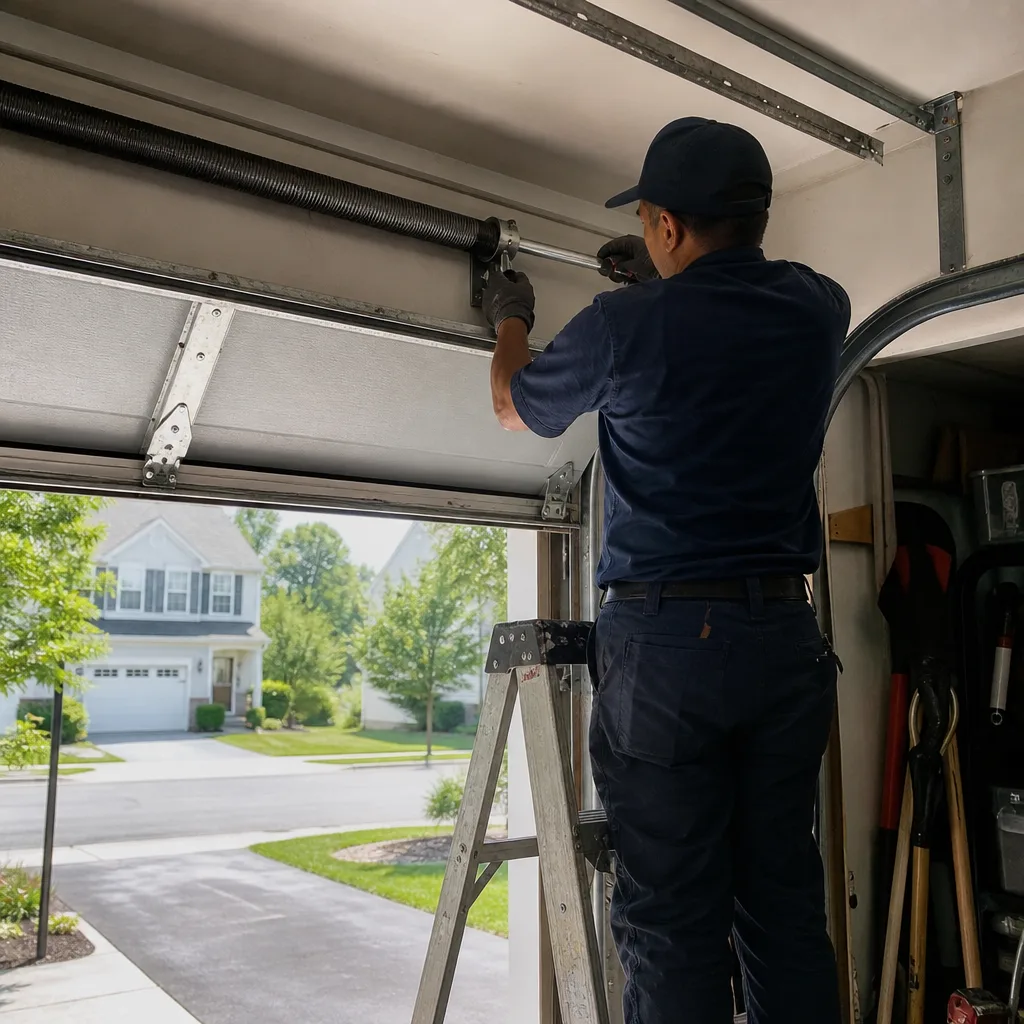
Garage doors run on torsion springs (mounted above the door on a shaft) or extension springs (running along the sides). When a spring breaks, the door becomes dangerously heavy, and the opener shouldn’t be asked to lift it. This work is high-tension and safety-critical, and many general handymen won’t touch it. Our technicians do. The spring is swapped, the door is rebalanced, and the opener is checked. A broken spring isn’t the time to test the door yourself.
Panel swap
If one section is dented or rusted but the rest of the door is sound, replacing the affected panel is cheaper than a full replacement. It’s a real fix when the door’s brand and model are still available, which is where brand fluency matters. Clopay, Amarr, Wayne Dalton, and Raynor panels are widely available; an orphaned door may not be.
Full replacement
A replacement means removing the old door and hardware, checking or replacing the springs since they’re matched to the door weight, and installing the new door and track. It’s scheduled work, not same-day emergency work, since panels are ordered and delivered. The same technician who diagnoses your door will quote the replacement too, so there’s no second appointment to get the number.
In Reston, the decision often comes down to age plus HOA approval. If your door is aged and the board already approves a replacement, a full swap usually makes more sense than pouring money into panels. If the door is sound and only one section failed, a panel swap keeps the approval process simple.
Choosing a Door Material for Reston’s Climate
Material choice is a climate decision as much as a style decision. Reston’s humid summers and cold winters reward materials that handle moisture swings without rusting, warping, or losing their finish. Here’s how the options stack up against this climate:
- Steel. The most common choice and a good one in a heavier gauge. Steel stamped to look like wood is a strong option for HOA communities. Its weakness is rust at the bottom edge if the seal fails.
- Aluminum. Light and rust-resistant, but dents more easily. It suits small openings and some carriage-house styles.
- Wood. Beautiful and heavy, but Reston’s humidity is hard on it. Wood needs regular sealing against moisture and may not pass some HOA finish standards.
- Composite and wood-look products. A middle path that looks like wood and handles moisture better. This is where some homeowners end up once their board asks for a wood look but their climate argues against real wood.
Two rules of thumb we share with Reston homeowners: match the door’s finish to what your HOA already approved, and choose a heavier gauge of steel over a lighter one with an added finish. The finish can be redone; the steel can’t be thickened.
What Garage Door Work Typically Costs in Reston
Garage door work in the Reston area is quoted per job, after the technician sees the door and opener. The ranges below are typical estimates, not a fixed price list. The written estimate you receive before any work starts is the final number. Prices vary with door size, spring configuration, opener condition, and access.
| Service | Typical estimate range | What drives the number |
|---|---|---|
| Torsion spring repair (single spring) | $180-$340 | Spring size, door weight, access |
| Extension spring repair (single spring) | $150-$280 | Spring set, door range of travel |
| Matched pair of springs | Roughly twice a single spring | Springs are almost always replaced in pairs |
| Opener repair (board, motor, remotes) | $120-$300 | Brand, part availability, diagnosis |
| Panel replacement | $200-$600 | Panel size, model availability |
| New door and opener installed | Varies widely by model and size | Material, insulation, size, HOA-approved model |
Why a matched pair? Springs wear at the same rate, so replacing one and leaving the other means the second is usually close behind. A pair costs about twice the single-spring range because the work and the parts double. A good technician will explain this up front rather than bill you again a few months later.
If your spring is broken, don’t run the opener. Call for a diagnosis and ask for the written estimate. Estimates are free.
A Maintenance Routine That Fits a Reston Home
Reston’s humidity makes a small amount of upkeep pay off. These steps cost almost nothing and add years to the door and opener.
- Lubricate the hinges, rollers, and tracks. A garage-safe lubricant on the moving parts, once or twice a year, keeps rust and noise down. Spring hardware too, but never put your hands near a spring.
- Inspect the bottom seal and threshold. If the seal is cracked or torn, replace it. This is the cheapest defense against the bottom-edge rust that Reston’s humidity drives.
- Check the photo-eye safety reverse. The door should reverse when the beam is broken. Test it, and if it fails, stop using the door and call a technician.
- Listen to the door. A grinding, scraping, or uneven motion is a signal, not a quirk. It’s often a sign of a roller or balance problem that’s cheaper to fix now than later.
- Watch for a bent or twisted door. A misaligned door puts extra strain on the opener and springs. Let a professional check it rather than forcing it.
- Keep the opener’s remotes and keypad working. If a remote stops responding, it may be a battery, a board, or a frequency issue. A quick diagnostic sorts it out.
Common Mistakes to Avoid
- Buying before HOA approval. Ordering the door before your community’s board signs off is the mistake that turns a week-long project into months of back-and-forth. Get the written approval first.
- Replacing one spring. Springs fail in pairs. Replacing one leaves a partner that’s ready to break, and the second call costs more than doing both at once.
- Pulling a door with a broken spring by hand. A door with a failed spring can weigh well over a car door and can drop without warning. This is a job for a trained technician.
- Ignoring the bottom seal. In Reston’s humidity, a torn seal traps water against the steel and starts rust at the most visible edge.
- Choosing R-value at the expense of fit. Insulation doesn’t make up for a door that wasn’t sized and adjusted to your opening. Fit first, R-value second.
- Assuming all openers are interchangeable. A replacement opener has to match your door’s weight and your remotes. Compatibility isn’t automatic.
- Painting over rust. Paint hides the rust; it doesn’t stop it. Treat the cause, which is moisture against the steel.
See the difference
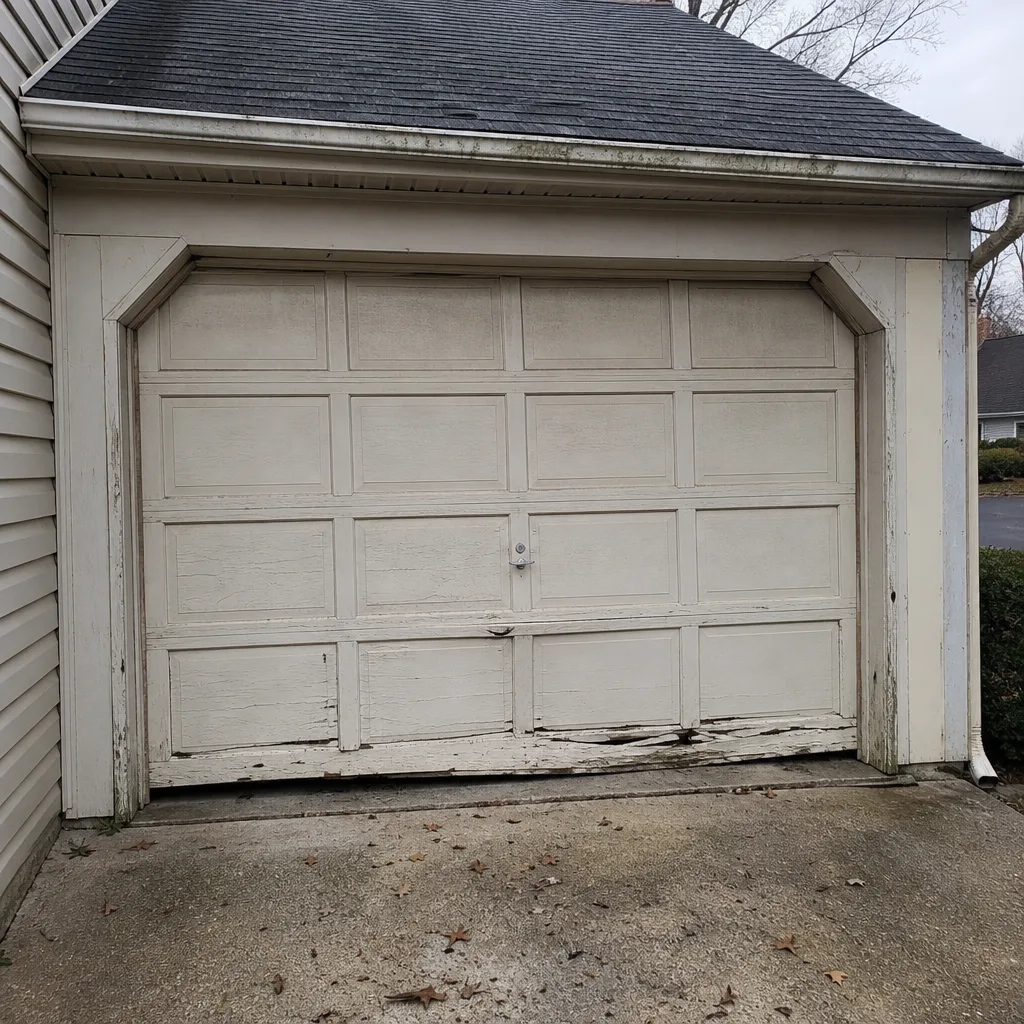 Before
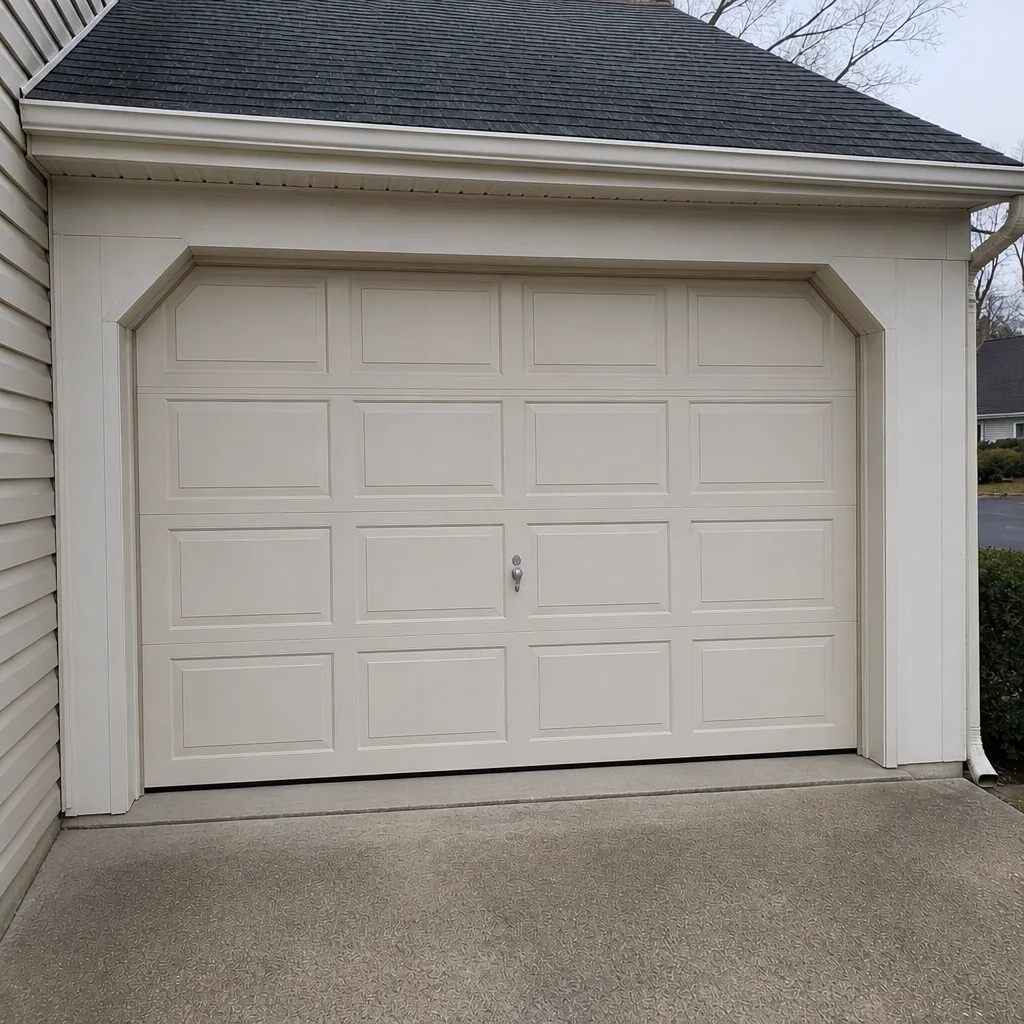 After
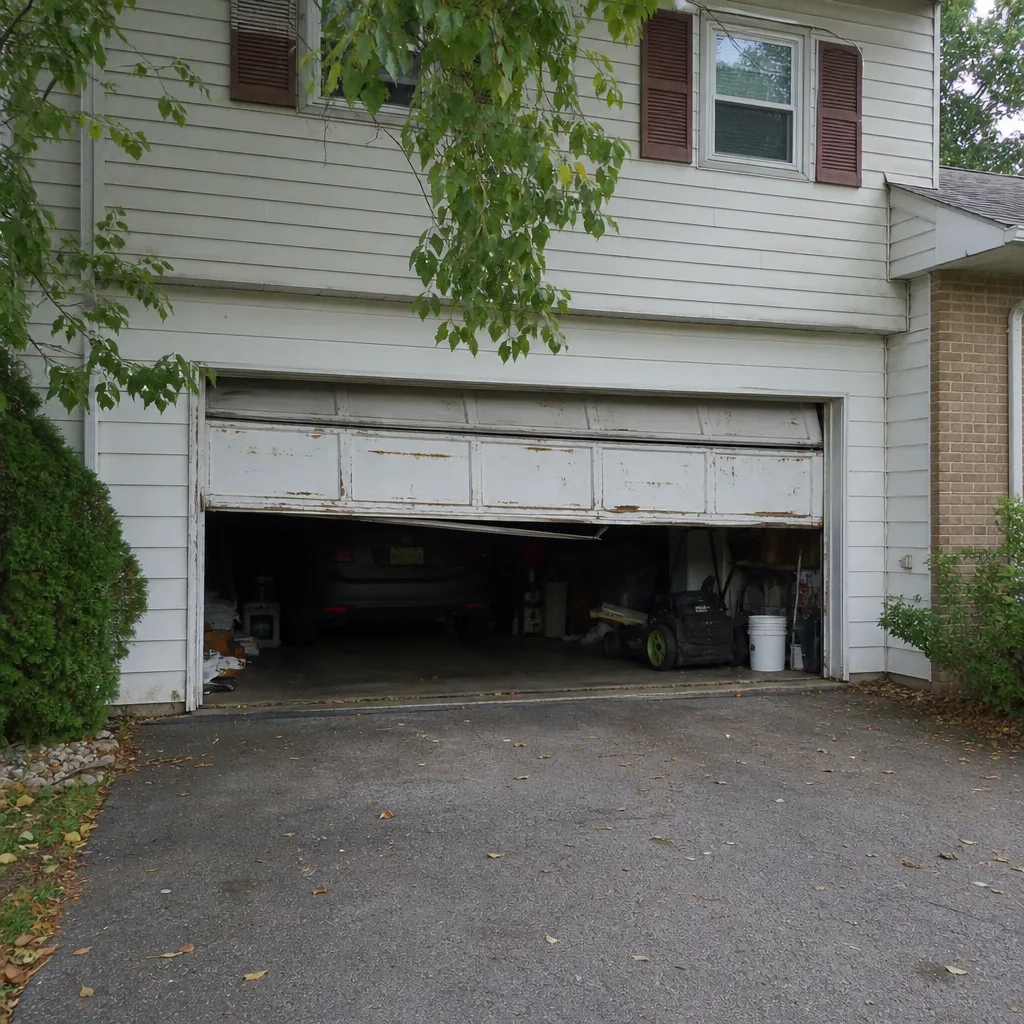 Before
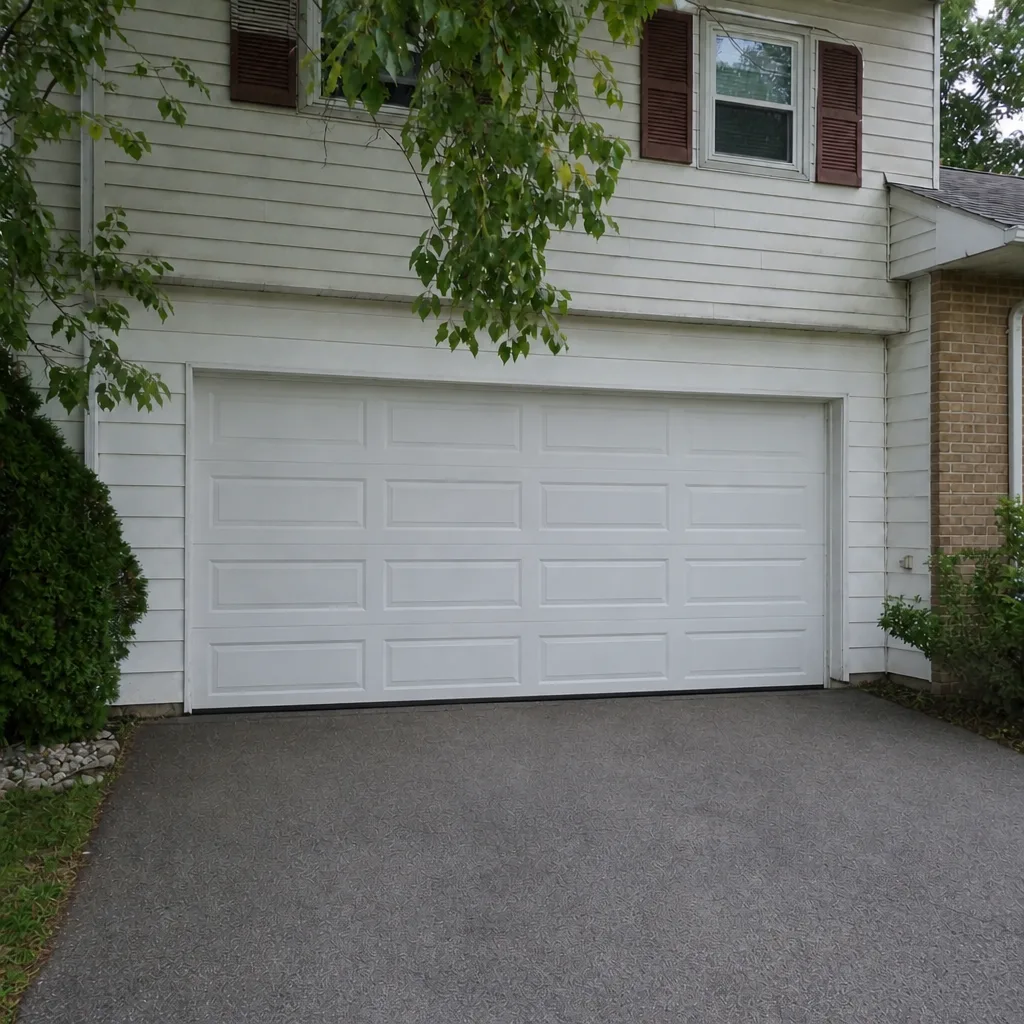 After
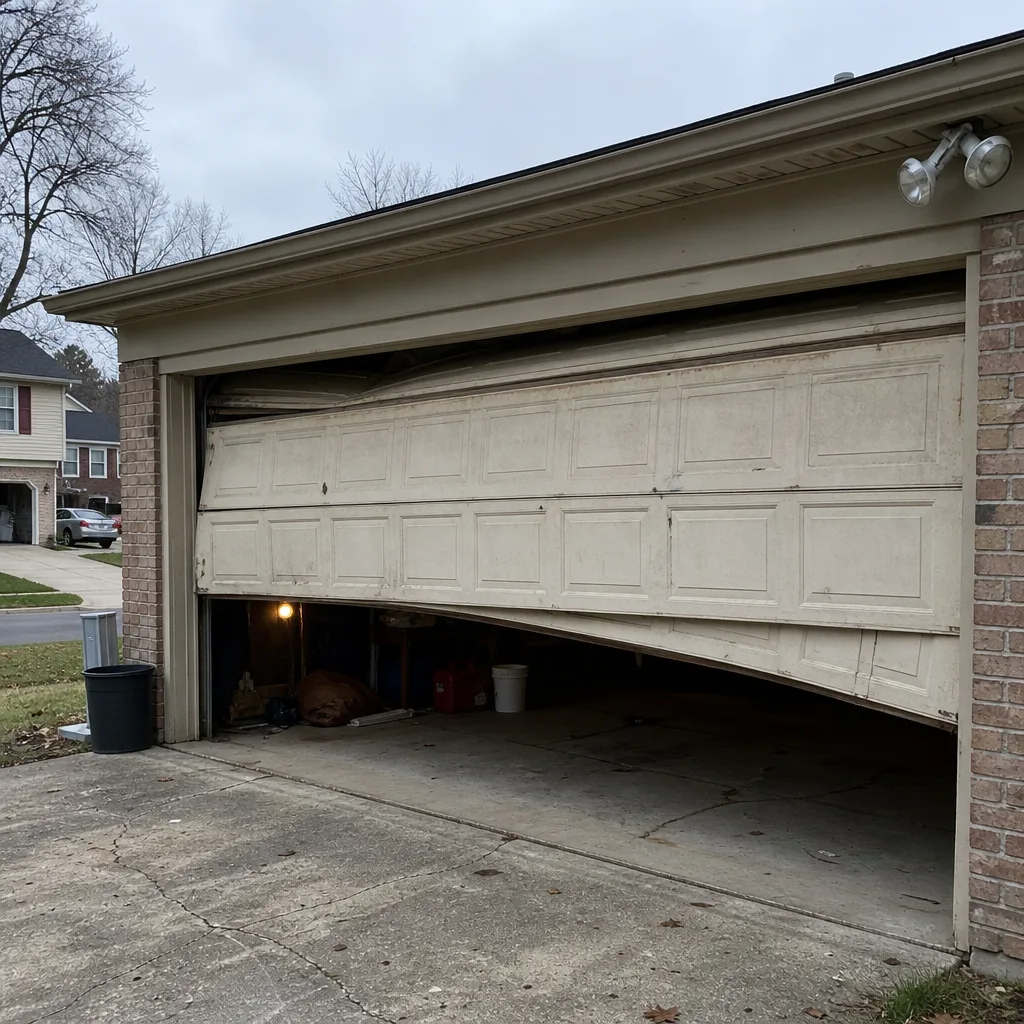 Before
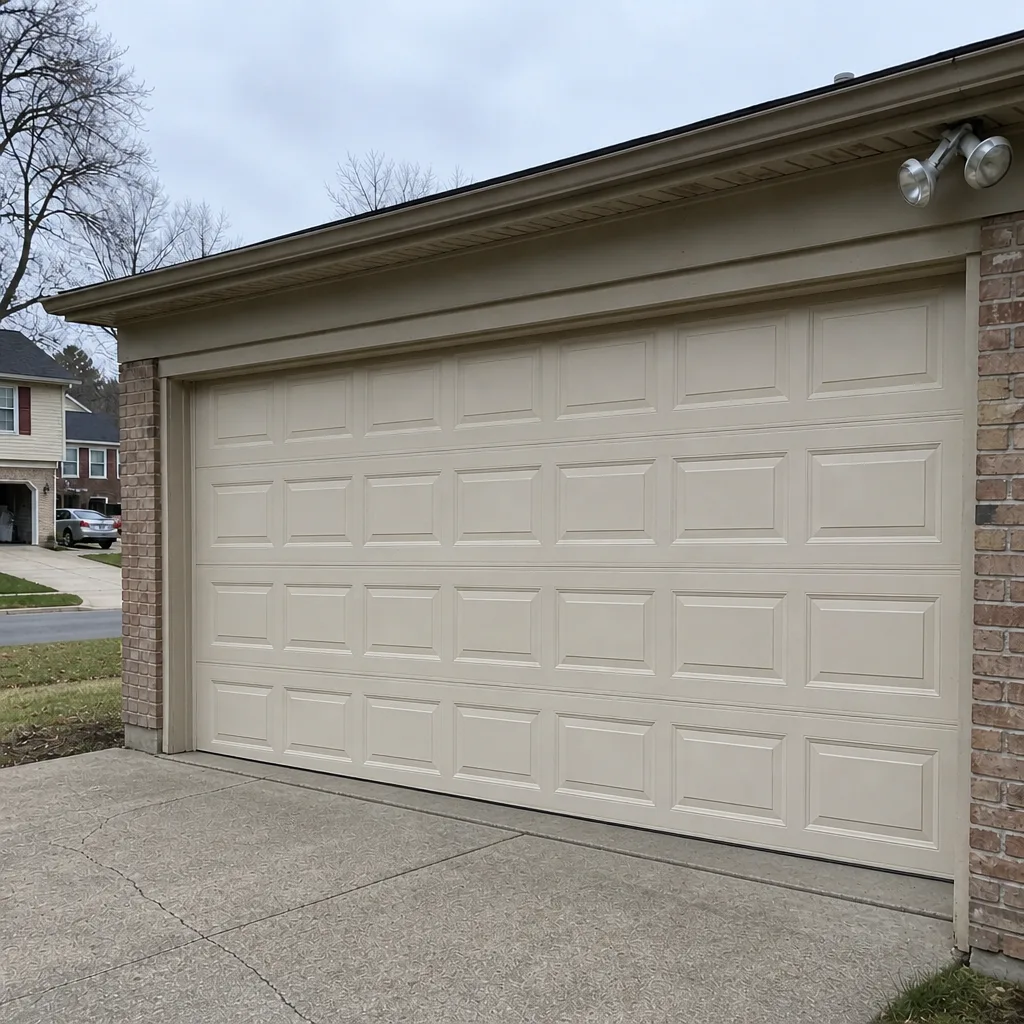 After
When to Call a Professional
Some garage door problems can wait for a scheduled appointment. Others can’t. Call a technician when a spring breaks, a cable snaps, the door comes off its track, or the opener grinds and stops. Don’t run the opener on a door that’s stuck or hanging unevenly, since the motor can force the door or damage the mechanism. If the door is used by a car that’s blocked in, or the house isn’t secure without it, that’s time-sensitive too. Panel damage, rust at the bottom section, a worn seal, and a failing opener are usually fine to schedule. If you’re weighing repair against replacement, a diagnostic visit is the cheapest next step, and the same technician can quote a new door if that’s the better answer. Garage Door Repair Reston offers free estimates in Reston – call (866) 972-4956.
Frequently Asked Questions
Typical estimates for a single torsion spring repair in the Reston area run about $180-$340, and a matched pair is roughly twice that, since springs are almost always replaced together. The written estimate sets the final price. Call (866) 972-4956 for an exact quote – estimates are free.
Emergency service is part of what we offer, and we take urgent calls for stuck doors, broken springs, and opener failures. Call (866) 972-4956 and we’ll schedule the fastest available visit – same-day when we can arrange it.
No, the price we quote in writing before any work starts is the price you pay. If we find a second problem once the door is open, such as a worn cable or a failing opener, we’ll tell you before we do anything and you decide. Nothing extra happens without your approval.
The independent local professionals we connect you with are licensed and insured as their state requires, and they’re trained on the garage door and opener systems we list, including LiftMaster, Chamberlain, Genie, Clopay, and Amarr. Call (866) 972-4956 with any questions before booking.
In most Reston HOA communities, yes – the architectural review board needs to approve the door’s style, color, and materials before installation. Get your community’s guidelines, submit the exact model, and keep the written approval. It’s the step that protects the rest of the project.
Repair is usually the better answer if the door is sound and only the spring, opener, or one panel failed. Replacement makes more sense if the door is showing rust across multiple sections, the hardware is failing, or your HOA has already approved a new style. A diagnostic visit can settle it. Call (866) 972-4956 to book one – estimates are free.
The Bottom Line
Garage doors in Reston are a design, climate, and system decision all at once. Get HOA approval before you order, choose the right steel and material for the Dulles Corridor’s humidity, match your opener to the brand you already have, and only pay for R-value where it actually does something. When something breaks, a spring, a cable, or an opener board, a trained technician can tell you whether a garage door repair is the right move or whether a replacement makes more sense. Start with a diagnosis, ask for the written estimate, and treat the quote as the price.
If your door won’t move, or you’re planning a replacement and want it right, call garage door spring repair questions and everything else to Garage Door Repair Reston at (866) 972-4956 for a free estimate. Our technicians have up to 15 years of experience, and we work on your brand, not just ours. For a same-day visit on a garage door repair Reston homeowners can schedule quickly, call now.
Written by the team at Garage Door Repair Reston.